Skip to content
Edge vision researchInnomium Research

Teach cameras to notice what operations cannot afford to miss.

The Innomium Vision program explores how compact detection systems can move from a promising benchmark to a dependable operational signal. We work across scene-specific evaluation, data design, model adaptation, ONNX packaging, edge inference, and alert behavior—because the detector is only one part of the decision system.

Falsifiable hypothesesInspectable artifactsProduction-minded constraints
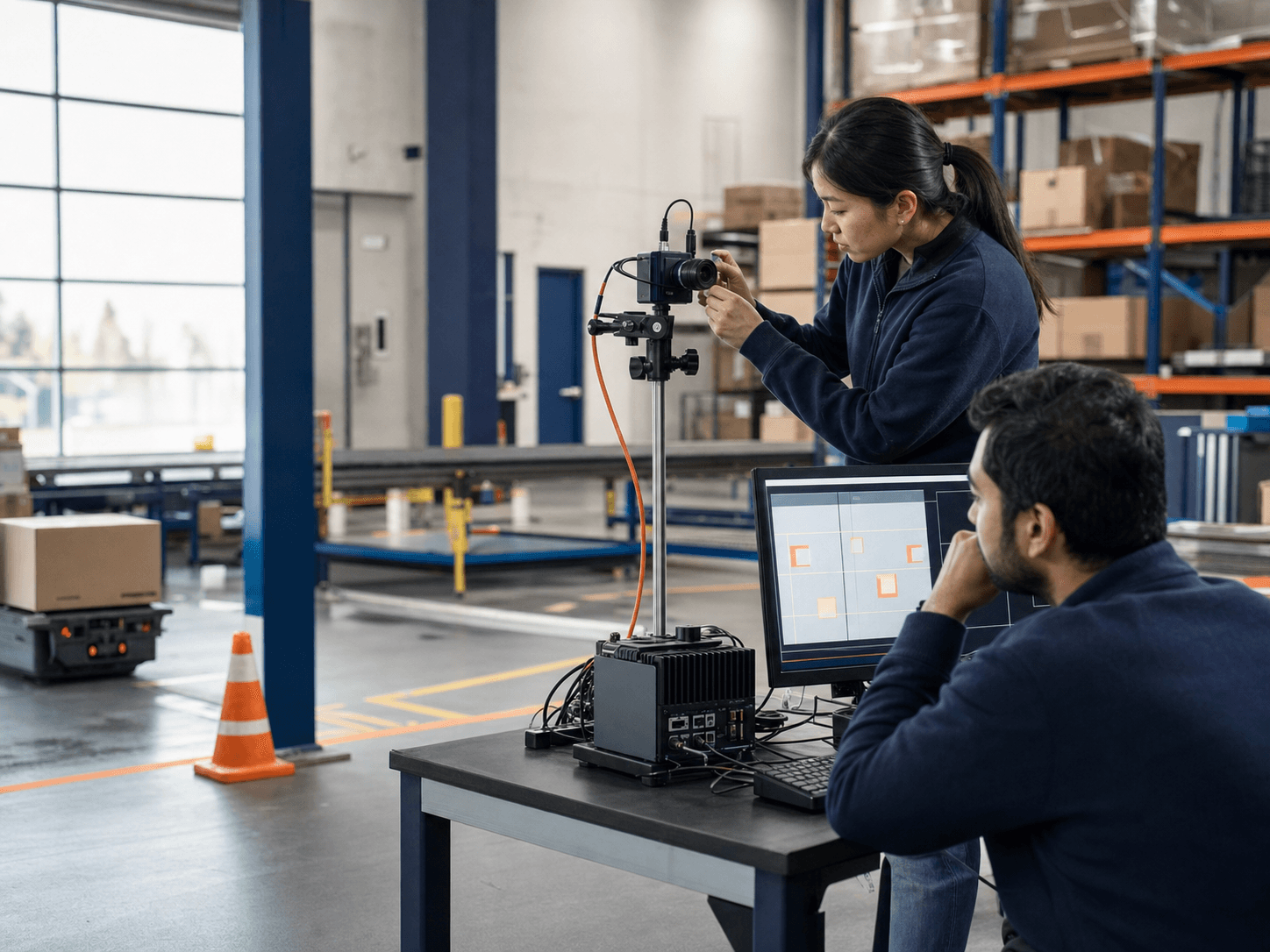
Computer-vision researchers calibrating an industrial camera and edge device in a logistics test environment

Program operating system

Hypothesis · Evaluation · Artifact · Decision

03

Public vision releases

Sentinel, Vantage, and Ember

ONNX

Portable packaging

Edge, CPU, and browser-oriented evaluation

Scene

Acceptance unit

Validate on the cameras and conditions that matter

Program thesis

A useful vision model is measured by the workflow it can support.

Accuracy on a convenient dataset is not enough. Camera position, weather, lighting, motion blur, object scale, occlusion, hardware limits, network conditions, and the cost of a false alert all reshape the real problem. The program treats those factors as first-class research variables, then turns the strongest findings into inspectable releases and deployment guidance.

QUESTION 01

Can compact models survive real scene variation?

We examine how scale, occlusion, illumination, weather, viewpoint, compression, and background texture alter detector behavior—and where tuning helps or merely hides a weak data foundation.

QUESTION 02

What belongs at the edge?

We study the trade between local inference, central processing, browser execution, and hybrid architectures across latency, privacy, bandwidth, updateability, observability, and hardware cost.

QUESTION 03

When should a detection become an action?

A box is not an operational outcome. We evaluate thresholds, temporal confirmation, zone logic, hard-negative handling, escalation, and human review as part of the complete alert pathway.

Connected research workstreams

Research depth across every layer that can change the result.

The model is never treated in isolation. Evaluation, data, runtime, integration, and operational ownership are part of the same research question.

01

Evaluation and data strategy

Define the acceptance problem before optimizing the model. We shape representative splits, hard-negative sets, class definitions, annotation rules, scene cohorts, and metrics that reflect the consequences of misses and false positives.

  • Evaluation protocol
  • Scene and failure taxonomy
  • Held-out acceptance set
02

Model adaptation and distillation

Compare baseline detectors, tune for the target domain, test augmentation and post-processing, and reduce model size only where the evidence shows that operational quality can be retained.

  • Baseline comparison
  • Adapted weights
  • Compression trade-off record
03

Edge inference engineering

Package models for practical runtimes, profile preprocessing and post-processing, measure latency and memory on representative hardware, and design a path for versioning and rollback.

  • ONNX artifact
  • Runtime profile
  • Deployment architecture
04

Workflow and alert design

Connect detections to the operating process. We define event semantics, confidence and temporal rules, review interfaces, observability, and feedback capture so model behavior can be governed after release.

  • Event contract
  • Alert policy
  • Monitoring and review plan

Evidence-led method

Every phase must buy down a named uncertainty.

Progress is measured by the quality of the evidence and the decision it enables—not by the number of experiments completed.

01

Observe the environment

Inventory cameras, scenes, frame quality, available labels, hardware, network paths, privacy boundaries, and response workflows.

Evidence: Constraint map and evaluation design

02

Challenge the baseline

Measure a simple, reproducible model first. Segment results by scene and failure mode instead of optimizing only a single aggregate score.

Evidence: Baseline report and error taxonomy

03

Adapt the complete pipeline

Improve data, model, preprocessing, post-processing, and temporal logic together while tracking the cost and value of each change.

Evidence: Ablations, model package, and runtime profile

04

Prove the operational path

Pilot on held-out scenes, test alert behavior and recovery, document limitations, and define the evidence required for a broader rollout.

Evidence: Pilot decision and productionization plan

Applied value

Start with the operating decision—not the novelty.

These are representative application patterns, not undisclosed client claims. Feasibility depends on the data, workflow, risk, and operating environment.

Industrial operations

Hazard and safety-event visibility

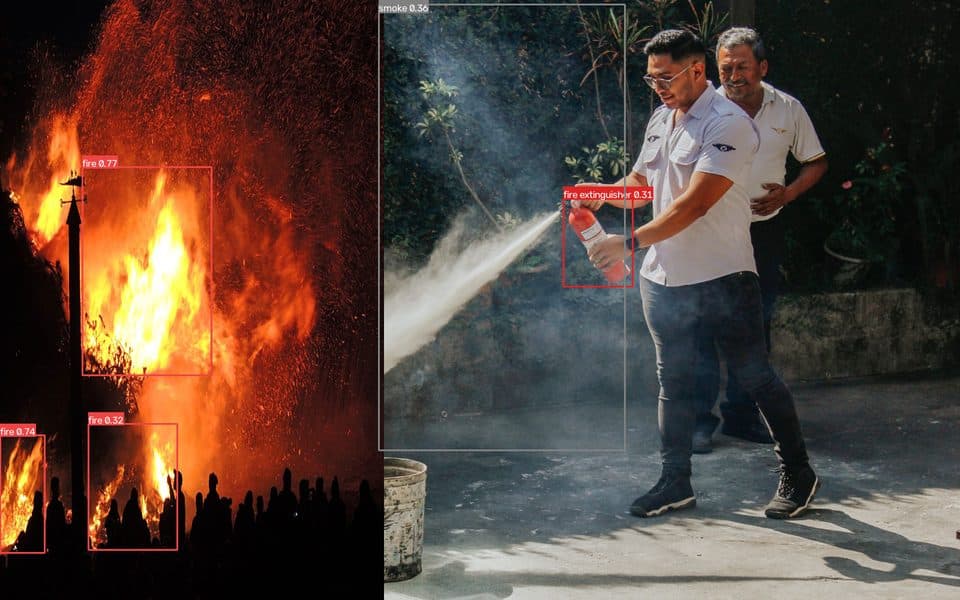
Evaluate fire, smoke, restricted-zone, or equipment-related signals where early attention may improve response. The model supports the workflow; it does not replace safety controls or accountable human decisions.

Logistics

Vehicle and yard-flow observation

Detect relevant vehicle classes or movements as inputs to congestion, gate, dock, or exception workflows without assuming that generic road footage represents a specific site.

Facilities

Occupancy and flow signals

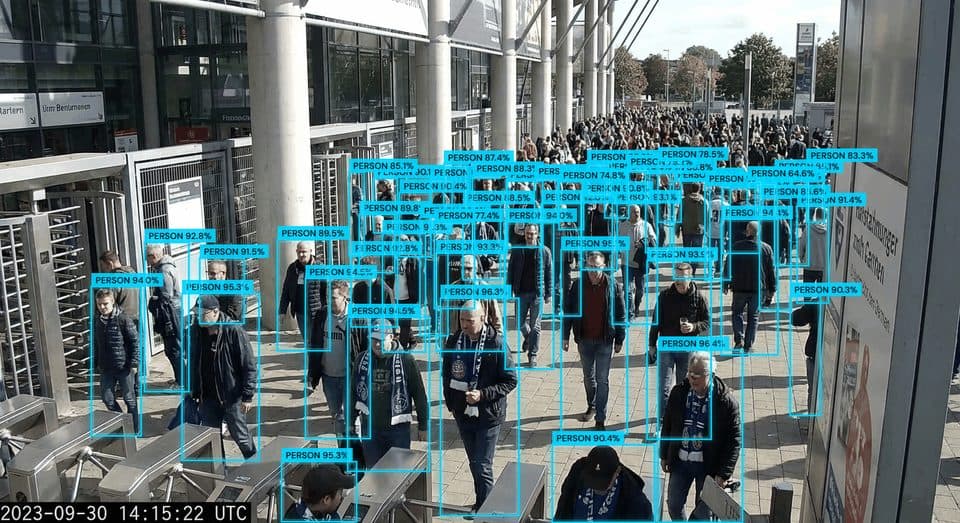
Explore privacy-conscious people-detection patterns for capacity, queue, or operational visibility, with explicit policies for retention, review, and acceptable use.

Product teams

Embedded visual intelligence

Add compact detection to a device or software product with a defined model-update path, runtime budget, telemetry design, and responsibility for failure handling.

Vision public releases

Research boundaries

Credibility includes saying where the evidence stops.

Public artifacts accelerate technical diligence. They do not remove the obligation to validate on your data, infrastructure, risk model, and operating process.

Public metrics are starting evidence.

Reported release figures describe specific Innomium protocols. They are not guarantees for a new camera, scene, geography, class definition, or operating threshold.

Detection is not a complete control system.

High-consequence workflows require redundancy, human oversight, escalation policy, and testing beyond the model. Computer vision should not be presented as the sole safety mechanism.

Privacy and acceptable use must be designed.

Data minimization, local processing, access control, retention, reviewability, and legal assessment belong in the architecture—not in a policy document added after deployment.

Research to delivery

Continue with the right engineering path.

Research can lead into a managed build, a dedicated specialist team, an Arena challenge, or a clear decision not to proceed.

Vision Arena challenge history

Closed challenge families from our public Arena program. Browse live Arena listings for current rules and leaderboards.

Browse on Innomium Arena
closedvision

Ember Outdoor Fire Challenge

Completed May 2026 · 74 participants

View Arena challenges
closedvision

Vantage Highway Detection Sprint

Completed Apr 2026 · 96 participants

View Arena challenges
closedvision

Sentinel Crowd Benchmark

Completed Mar 2026 · 128 participants · integrated into Sentinel QA

View Arena challenges

Frequently Asked Questions

Sentinel, Vantage, and Ember on Hugging Face.

Turn a camera problem into an evidence-led deployment decision.

Bring the scenes, hardware, workflow, and consequence of error. We will define the evaluation path, adaptation work, and operating evidence a responsible first phase should produce.

Built for accountable delivery

Clear scope. Technical evidence. A team that can ship.

We begin with the operating constraint, agree on what success looks like, and build a delivery path your technical and business teams can review.

01

Defined outcomes

Scope, constraints, milestones, and decision owners before build work starts.

02

Evidence at every stage

Evaluation plans, working artifacts, and reviewable technical decisions—not presentation-only progress.

03

Production handover

Integration, observability, documentation, and an operating path for the teams who own the result.